
Media Center
Health Blogs
In the UAE, the Ministry of Health and Prevention (MOHAP) offers the HPV vaccine to girls aged 13 through the national school immunisation programme, and cervical screening is widely available. Even so, cervical cancer myths still lead some women to put off a Pap smear for years. According to the World Health Organization (WHO), nearly all cervical cancers are caused by persistent infection with high-risk human papillomavirus (HPV). That makes cervical cancer one of the most preventable cancers, through vaccination and regular screening.
Key Takeaways
The table below sets out cervical cancer myths and facts side by side, with a practical next step for each.
| Myth | Fact | What this means for you |
|---|---|---|
| Cervical cancer is hereditary | It is rarely inherited through genes. | Keep up with screening even if no relative has had it. |
| Only women with many partners get HPV | Anyone who has been sexually active can acquire HPV. | Book screening based on your age, not your history. |
| HPV always leads to cancer | Most HPV infections clear on their own. | Use screening to check for changes that persist. |
| The HPV vaccine causes infertility | WHO safety reviews have found no link to infertility. | Ask your doctor about the vaccine if you have concerns. |
| Vaccinated women do not need screening | The vaccine does not protect against every high-risk type. | Keep your screening appointments. |
| No symptoms means no problem | Early changes usually cause no symptoms. | Get screened even when you feel well. |
| An abnormal Pap result means cancer | It usually means cell changes, inflammation or HPV. | Attend any follow-up your doctor recommends. |
| Older women can stop screening | Screening usually continues to around 65. | Ask your doctor about your screening interval. |
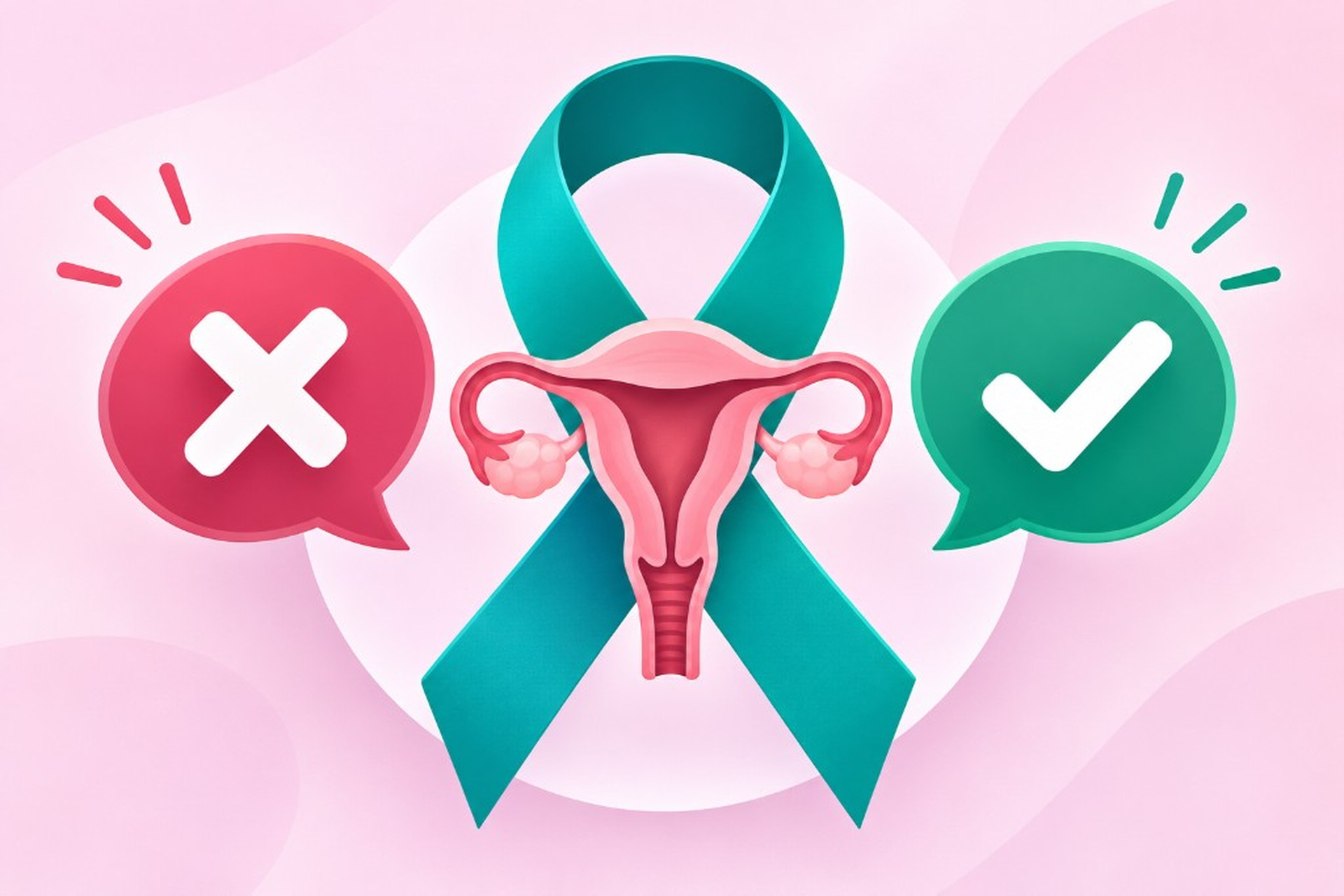
Persistent infection with high-risk HPV types causes nearly all cervical cancers, according to the WHO. HPV spreads through intimate skin-to-skin contact and is very common. Most people who have ever been sexually active will meet it at some point, and in most cases the body clears it without treatment.
The problem is infection that persists. The WHO estimates that it can take 15 to 20 years for a persistent infection to become cancer in women with a normal immune system. That long window is what gives screening its value.
Some factors make it harder for the body to clear HPV or speed up cell changes:
Several things often blamed do not cause cervical cancer. Tampons do not cause it, and neither does poor hygiene. Most cases are also not inherited in the way some breast cancers linked to faulty genes are.
Two of the most persistent myths about cervical cancer are that any HPV infection leads to cancer and that only women with many partners are at risk.
No. According to the WHO, most HPV infections clear by themselves, usually within about two years. Only infections with high-risk types that persist can cause abnormal cell changes, and screening is designed to find those changes before they turn into cancer. This is one of the most reassuring HPV and cervical cancer facts: a positive HPV test is a reason for follow-up, not alarm.
No. Anyone who has ever been sexually active can acquire HPV, including women who have had only one partner in their lifetime. The virus is common and often causes no symptoms, so a partner may carry it without knowing. A positive result says nothing about your choices. It simply means your doctor will guide the next step.

Yes. The WHO considers HPV vaccines safe and effective. HPV vaccine myths can stop parents and young women from taking up a vaccine with a strong safety record. If you are considering the HPV vaccine in Dubai, these are the facts behind two common worries.
No. Safety reviews by the WHO's expert committee on vaccine safety have found no evidence that HPV vaccination affects fertility. The vaccine prevents the infections that lead to precancerous changes, and preventing those changes can spare women from needing treatment on the cervix later.
Yes. The vaccine protects against the HPV types responsible for most cervical cancers, but not every high-risk type. Some women were also exposed to HPV before they were vaccinated. Continue screening at the intervals your doctor recommends, and speak to our women's health team if you are unsure when your next test is due.
Yes. Many cervical cancer misconceptions come from assuming that feeling well, or a single test result, tells the whole story.
Yes. Precancerous changes and early cervical cancer usually cause no symptoms at all. Screening exists to find problems at this stage, long before you would notice anything. Feeling well is not a reason to skip a test.
No. An abnormal result usually points to cell changes, inflammation or an HPV infection, not cancer. Many mild changes go back to normal without treatment. Your doctor may recommend further tests or a repeat smear to decide on the next step.
Unusual bleeding, discharge or pelvic pain should always be checked by a doctor. When the NHS sets out cervical cancer symptoms and causes, it lists these as possible signs:
Less serious conditions often cause these symptoms, but each one still deserves a prompt check. Persistent pelvic pain can be assessed through our chronic pelvic pain service, and bleeding after menopause should always be reviewed by a doctor as part of your menopause care.
The Dubai Health Authority (DHA) recommends cervical screening for women aged 25 to 65. Under DHA guidance, cytology (the Pap smear) is repeated every three years, and HPV testing every five years.
Your doctor will set your interval based on your age, past results and vaccination history. For cervical cancer screening in Dubai, start with a conversation about preventive health screening or speak to our women's health team about when a Pap smear test is right for you.
Yes, in most cases. According to the WHO, cervical cancer is one of the most successfully treatable cancers when it is found early and managed effectively. The American Cancer Society reports a five-year relative survival rate of about 91% for cervical cancer that has not spread beyond where it started. These figures describe large groups of patients and cannot predict how any one person will do.
Treatment depends on the stage of the disease and is planned by a specialist team. For early-stage cervical cancer, the NHS describes options that include surgery to remove the cancer (sometimes with a hysterectomy) and radiotherapy, which may be combined with chemotherapy. Some women with very early disease may be able to have surgery that preserves fertility. If you have questions about cervical cancer treatment in Dubai, a specialist in obstetrics and gynaecology can explain your options.

Cervical cancer is largely preventable, and these cervical cancer prevention tips are drawn from WHO and NHS advice:
The WHO's elimination strategy aims for 90% of girls vaccinated by age 15, 70% of women screened and 90% of women with cervical disease treated, by 2030.
If you have questions about screening intervals, a recent result or HPV vaccination, a consultation is a good place to start. Visit our women's health services page, contact us to book, or check our location and opening hours in Jumeirah.
This article is for general information only and does not replace professional medical advice, diagnosis or treatment. Always consult a qualified healthcare professional about your individual situation. If you have a medical emergency, call 998 or go to your nearest emergency department.
A Pap smear looks at cells from your cervix for abnormal changes, while an HPV test checks the sample for the high-risk HPV types that can cause those changes. Both use a sample collected in the same way during a short examination. Your doctor will advise which test suits your age and history.
It depends on the type of hysterectomy and the reason for it. If your cervix was removed for a condition that was not cancer and you have no history of significant cell changes, you may not need further screening. If you still have your cervix, or your surgery was for cancer or precancerous changes, your doctor may recommend continued testing.
The risk is very low for women who have never had any sexual contact, because HPV spreads through intimate contact. A small number of cervical cancers are not linked to HPV, so ask your doctor whether screening is right for you.
Most women find a Pap smear uncomfortable rather than painful, and it takes only a few minutes. Tell your clinician if you feel anxious or uncomfortable. They can slow down, adjust the position or use a smaller speculum.
Yes. The HPV vaccine is licensed for boys and men as well as girls and women, and some countries include boys in their school programmes. Vaccinating males helps protect against other HPV-related cancers and genital warts, and reduces the spread of HPV to partners. Ask your doctor whether the vaccine is suitable for you or your son.
We partner with a number of health insurers to offer healthcare coverage for our patients.
Conveniently located in Sunset Mall in Jumeirah 3, we operate from Monday – Thursday 8:00 am - 8:00 pm, Friday 8:00 am - 6:00 pm, and Sunday 8:00 am - 6:00 pm
Reach out to us
Please let us know if you have any compliments, suggestions, or complaints about our services.


